QUESTION: Precisely, what land did God promise to Abraham (and Jacob)? What precise region was it, as defined in Scripture, and what would that be by today’s place names?
I am grounding this first in the boundary texts and then mapping the named borders into current geography. The main issue is not whether a promise exists, but how to identify “the river of Egypt” and whether Genesis 15 gives the maximal covenant border or the normal lived inheritance border.
The textual hinge is this: Genesis 15 gives the broad covenant grant, while Numbers 34 gives the narrower allotment lines for tribal distribution in Canaan. So the answer is not one flat sentence. Scripture itself presents a maximal covenant border and a more specific administrative border.
[Partly unverified: the biblical border texts are clear, but a few northern place identifications such as Mount Hor, Ziphron, and Hazar-enan are probable rather than certain.]
Summary
-
Abraham, Isaac, and Jacob are promised the same land, not three different lands. Genesis 28:13 localizes the promise at Bethel, but Genesis 35:12 explicitly says Jacob receives “the land” already given to Abraham and Isaac. Genesis 15:18 gives the broad covenant border, and Genesis 17:8 defines that inheritance as “all the land of Canaan.”
-
Scripture presents two concentric land descriptions. The broader Abrahamic grant runs from “the river of Egypt” to the Euphrates, and from the southern wilderness region up to Lebanon and the Hamath approach. The narrower Numbers 34 map is the specific land of Canaan to be apportioned west of the Jordan, with Transjordan handled separately.
-
The best current geographical identification for the southwest border is not the Nile but the Wadi el-Arish in northern Sinai, near modern al-Arish. That is because later border texts regularly use the “brook/stream of Egypt” language for the southwestern boundary, and Wadi el-Arish is a seasonal watercourse emptying into the Mediterranean near al-Arish. The Euphrates is the well known river running through modern Turkey, Syria, and Iraq, so the eastern limit reaches to the Euphrates corridor in modern Syria.
-
In today’s place names, the broadest promise most naturally includes modern Israel, the West Bank, Gaza, northern Sinai up to the Wadi el-Arish, much or all of Jordan, much of Lebanon, and a significant belt of southwestern and central Syria up to the Euphrates. The narrower Numbers 34 “Canaan” map is mainly the land west of the Jordan, extending north into Lebanon and northeast toward the Syria frontier, but not all the way east to the Euphrates.
Exegesis
Genesis 15:18 in the Masoretic Text reads: “min-nehar mitsrayim ad-ha-nahar ha-gadol nehar perath” [from the river of Egypt to the great river, the river Euphrates]. Key terms are nahar [river] and Perath [Euphrates]. The construction min … ad [from … to] marks an outer territorial span, not a mere travel route. The Septuagint preserves the same sense with “apo tou potamou Aigyptou heos tou potamou tou megalou, potamou Euphratou” [from the river of Egypt to the great river, the Euphrates river]. There is no major textual variant here that changes the geography.
Genesis 17:8 then identifies the inheritance as “all the land of Canaan,” and Genesis 35:12 explicitly transfers that same land to Jacob. Genesis 28:13 does not mean Jacob only receives the few square meters under his body at Bethel. In context, “the land on which you lie” is a local reaffirmation of the already established patriarchal land promise, and Genesis 35:12 removes any doubt by restating the same inheritance formula given to Abraham and Isaac.
The crucial lexical distinction is this. Genesis 15:18 uses nahar mitsrayim [river of Egypt], while Numbers 34:5 uses the root n-h-l in “nahal/nahalah mitsrayim” [brook, wadi, torrent-bed of Egypt]. That difference is why some Jewish interpreters took Genesis 15 toward the Nile reading. A traditional Jewish line, seen for example in Rashi on Joshua 13:3, identifies the Egyptian border river with the Nile. But the recurring border formula in Numbers, Joshua, Kings, and Isaiah fits the Wadi el-Arish frontier better than the Nile delta.
The boundary sets in Scripture
The broad Abrahamic or covenant boundary is given across several texts. Genesis 15:18 gives southwest to northeast: river of Egypt to Euphrates. Deuteronomy 11:24 and Joshua 1:4 add south to north and west to east: from the wilderness to Lebanon, and from the Euphrates to the western sea [Mediterranean]. Exodus 23:31 gives the same land in another frame: from the Red Sea to the Sea of the Philistines, and from the wilderness to the River. Read together, these texts describe the maximum covenant grant.
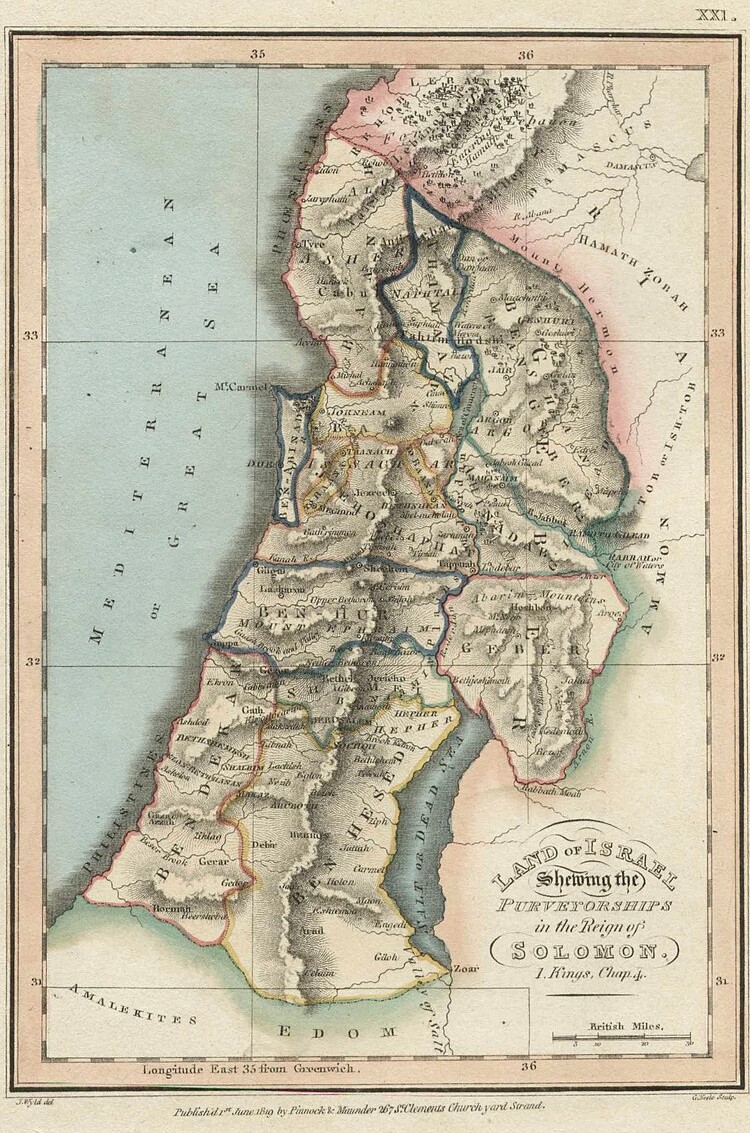
The narrower Numbers 34 description is explicitly “the land of Canaan with its borders.” Its south line runs from the wilderness of Zin along Edom, through the region of Kadesh-barnea, to Azmon, then to the Brook of Egypt and the Mediterranean. Its west side is the Great Sea. Its north line runs from the Mediterranean toward Mount Hor, Lebo-hamath, Zedad, Ziphron, and Hazar-enan. Its east line then drops from Hazar-enan by Shepham and Riblah to the east side of the Sea of Kinnereth [Sea of Galilee], then down the Jordan to the Salt Sea [Dead Sea]. That is not the same as saying the tribal allotment border itself ran along the Euphrates.
What that means by today’s place names
If one asks for the most defensible modern rendering of the broad promise, the southwest marker is most likely Wadi el-Arish near modern al-Arish in North Sinai, Egypt. The western edge is the Mediterranean coast. The northern edge reaches through Lebanon toward the Hamath approach, with Lebo-hamath commonly identified around modern Labwa in the northern Beqaa Valley of Lebanon. Zedad is probably Sadad in Syria. Hazar-enan is often placed near al-Qaryatayn in Syria, though that last identification is not certain. Riblah is usually identified with modern Ribleh in Syria. Kadesh-barnea is commonly associated with the Ain el-Qudeirat oasis area in northeastern Sinai.
So, in present-day terms, the maximal Abrahamic grant most plausibly covers: all of modern Israel; the Palestinian territories of the West Bank and Gaza; the northern Sinai border zone up to Wadi el-Arish; most or all of modern Jordan; much of modern Lebanon; and a substantial part of southwestern and central Syria reaching to the Euphrates corridor. The text itself names rivers, seas, deserts, and approach-cities, not modern nation-states, so this is an approximate modern mapping, not a Scripture-given nation-state polygon.
Historically, the Old Testament says Israel came closest to this wider extent under David and Solomon. Solomon is described as ruling “from the Euphrates … to the border of Egypt,” and the celebratory formula “from Lebo-hamath to the Brook of Egypt” shows the standard north-south frame. But that is political dominion and tribute language, not proof that every inch was fully settled tribally in the Numbers 34 sense.
Theological analysis
From a conservative dispensational reading, the land promise is literal, territorial, and multigenerational. Jacob does not replace Abraham’s land promise with a merely spiritual promise; he inherits the same one. The logic is: Genesis 15 gives the covenant border, Genesis 17 names it as Canaan, Genesis 28 localizes it to Jacob, Genesis 35 explicitly transfers the same land to Jacob, and Numbers 34 gives the concrete Canaan allotment within that larger covenant framework. The promise is therefore not reducible to a symbol, even though it also has typological and redemptive significance.
On the metaphysical [reality-structure] level, the land is not random acreage. It is the divinely marked stage on which seed, kingdom, worship, inheritance, holiness, and judgment become historical and visible. In biblical ontology [what the thing really is], the land is covenant-space: geography ordered by God’s oath. On the psychological-spiritual level, that means Israel’s relation to the land is never merely cartographic. The grant is from God, but the enjoyment of it is tied to covenant fidelity. That is why Scripture can speak both of an irrevocable patriarchal gift and of temporal exile for disobedience without contradiction.
Bottom line
Precisely stated: God promised Abraham, Isaac, and Jacob the same land – “all the land of Canaan” – with a maximal covenant span from the Egyptian frontier, best identified as the Wadi el-Arish though a Nile reading exists in some Jewish tradition, to the Euphrates; from the southern wilderness and Red Sea region up to Lebanon and the Hamath approach; and from the Mediterranean eastward to the Euphrates corridor. In modern place names, that most plausibly means Israel, the West Bank, Gaza, northern Sinai to al-Arish, most or all of Jordan, much of Lebanon, and part of Syria up to the Euphrates. The narrower Numbers 34 map is the land of Canaan for tribal allotment, not the full outer limit of the Abrahamic grant.
QUESTION: Then this is why God forbid Moses to trouble Edom, for Godhave given them the land and it was outside the boundaries He had stated for Israel?
I have the comparison. The governing principle is not ethnicity by itself, but Yahweh’s territorial allotment and judicial timing: three peoples are protected because God assigned them land, two kings are dispossessed because God assigned their land to Israel and brought them under judgment.
-
Deuteronomy 2-3 distinguishes between protected inheritances and transferable inheritances.
-
Edom, Moab, and Ammon were forbidden because Yahweh had assigned them land as a yerushshah [inheritance, possession].
-
Sihon and Og were taken because Yahweh explicitly transferred their land to Israel and brought them under judgment.
-
So the controlling principle is not simply ethnicity, proximity, or military opportunity, but divine allotment [God’s assignment of territorial right] and divine timing.
Tight comparison
-
Edom
Command: al titgaru bam [do not contend with them].
Reason: ki yerushshah le-Esav natatti et har Seir [for I have given Mount Seir to Esau as an inheritance].
Result: Israel must not take even “a footstep” of Edomite land and is to buy food and water rather than seize resources.
Meaning: Edom is protected because Yahweh has already granted Seir to Esau’s line. This is a legal-theological restriction, not merely a tactical one. -
Moab
Command: al tatsar et Moav we-al titgar bam milchamah [do not harass Moab, and do not contend with them in war].
Reason: ki li-vnei Lot natatti et Ar yerushshah [for I have given Ar to the sons of Lot as an inheritance].
Result: Moab is not to be attacked or annexed.
Meaning: Moab too is under a protected divine allotment. In other words, Israel’s covenant status does not cancel God’s territorial rights granted to other kin-related peoples. -
Ammon
Command: al tetsurim / al titgar bam [do not harass them; do not engage them in war].
Reason: ki li-vnei Lot netattiha yerushshah [for I have given it to the sons of Lot as an inheritance].
Result: Israel must not take Ammonite land, and even after defeating Sihon, Israel stops short of the Ammonite border.
Meaning: Ammon is protected for the same reason as Moab: God assigned that territory to Lot’s descendants. Deuteronomy 2:37 is decisive because it shows Israel actually observed that boundary. -
Sihon
Command: hachel rash we-hitgar bo milchamah [begin to possess, and engage him in war].
Reason: re’eh נתתי? In Hebrew: re’eh natatti beyadkha et Sihon … we-et artso [see, I have given Sihon and his land into your hand]. Then Deuteronomy adds that Yahweh hardened [hiqshah / chizzeq idea; made obstinate] Sihon’s spirit and heart so that he would be delivered over.
Result: Israel defeats Sihon, takes all his cities, and places the population under herem [ban, devoted destruction].
Meaning: This is the exact inverse of the Edom-Moab-Ammon formula. Instead of “I will not give you their land,” Yahweh says, in effect, “I have given you his land.” -
Og
Command: al tira oto [do not fear him].
Reason: כי בידך נתתי אתו ואת כל עמו ואת ארצו, ki beyadkha natatti oto we-et kol ammo we-et artso [for I have given him, all his people, and his land into your hand].
Result: Og is defeated, his fortified cities are taken, his land is inherited, and it is distributed to Reuben, Gad, and half Manasseh.
Meaning: Og stands in continuity with Sihon. Both are Amorite kings east of the Jordan whose territory is judicially transferred to Israel.
The exegetical pattern
The repeated Hebrew noun is yerushshah [inheritance, possession]. For Edom, Moab, and Ammon, Yahweh says in substance, “I gave that inheritance to them.” For Sihon and Og, Yahweh says in substance, “I have given that land into your hand.” The same divine sovereignty stands behind both prohibition and conquest. God is not merely helping Israel win wars; He is distributing territorial rights.
Another key verb pair is negative versus positive warfare language. With Edom, Moab, and Ammon the language is prohibition: al titgaru [do not contend], al tatsar [do not harass], al … milchamah [do not wage war]. With Sihon the language flips: hachel rash [begin to possess], hitgar bo milchamah [engage him in war]. That reversal is the literary hinge of Deuteronomy 2-3.
There is also an important precedent argument in the chapter. Deuteronomy notes that Edom, Moab, and Ammon themselves had displaced earlier giant-like peoples: Horites in Seir, Emim in Moab, Zamzummim in Ammon. The point is theological, not antiquarian [mere old-history reporting]. Yahweh has always been the one assigning lands and removing prior inhabitants according to His purpose. Israel’s conquest is therefore one instance of a wider divine government of nations.
Textual note
There is no major textual variant in Deuteronomy 2-3 that changes the main logic of the passage: some lands are protected because God assigned them to other peoples, while Sihon and Og are delivered to Israel. One minor place-name issue appears in the displayed LXX of Deuteronomy 2:9, where the Greek text differs from the MT’s “Ar,” but the theological force remains the same: Moab’s territory is not for Israel to seize.
Theological analysis
From a dispensational and broadly Free Will reading, Deuteronomy 2-3 shows that the Abrahamic land promise does not function as a blank check for indiscriminate expansion. Israel receives only what God presently assigns. Promise is real, literal, and territorial, but its realization is governed by divine command, divine timing, and divine moral judgment. That is why Israel may not seize Edom, Moab, or Ammon, yet may lawfully take Sihon and Og.
This also clarifies your earlier question about boundaries. The deeper issue is not simply “inside or outside the Abrahamic map.” The deeper issue is jurisdiction [authorized right under God’s decree]. Even where Israel is strong enough to take land, they may not do so without divine warrant. Conversely, when God judicially transfers land, refusal, fortification, and giant stature do not prevent the transfer.
Metaphysical level [what reality itself is doing]
Reality in Deuteronomy 2-3 is covenantal-juridical [promise-shaped and legally ordered]. Land is not treated as mere soil, nor as a prize for the strongest tribe, but as an administered inheritance under the universal kingship of God. Yahweh is portrayed as the one who allots, restrains, hardens, judges, and transfers. So the ontology [what the land really is in biblical thought] is not “neutral geography” but covenant-governed space under divine title.
Psychological-spiritual level [soul, will, affections]
For Israel, this disciplines desire. They cannot equate hunger, fear, military capacity, or even covenant privilege with moral permission. Their will must be bounded by revelation. For Sihon, the text presents a judicial hardening: his internal obstinacy becomes the means by which God’s outward judgment is enacted. So the chapter ties inner disposition and external history together under divine sovereignty.
Divine-perspective level
From the divine perspective, Yahweh is not acting tribally in the modern sense, as though He only cares about Israel and ignores the rest. He gives Seir to Esau, Ar to Moab, land to the sons of Ammon, and then gives Sihon and Og to Israel. He governs all peoples, but not all peoples in the same covenantal role. Israel is elect [chosen for covenant purpose], yet her election does not erase God’s ordering of other nations.
Bottom line
Why were some forbidden and others taken?
Because Deuteronomy 2-3 is structured around two opposite divine verdicts:
-
“I will not give you their land” – Edom, Moab, Ammon.
-
“I have given you his land” – Sihon, Og.
That is the tightest explanation the text itself gives. The decisive category is divine allotment [God’s assignment of inheritance], not mere geography, kinship, or military possibility.