Physical judgment of sickness & death for undiscerning communion takers:
Last time I took communion, speaking on ‘discerning the Body of Christ’ I read this and I noticed something, that confined something I learnt many years ago:
1 Cor 11:27 Whoever, therefore, eats the bread or drinks the cup of the Lord in an unworthy manner will be guilty concerning the body and blood of the Lord. 28 Let a person examine himself, then, and so eat of the bread and drink of the cup. 29 For anyone who eats and drinks without discerning the body eats and drinks judgment on himself. 30 That is why many of you are weak and ill, and some have died. 31 But if we judged ourselves truly, we would not be judged. 32 But when we are judged by the Lord, we are disciplined so that we may not be condemned along with the world. 33 So then, my brothers, when you come together to eat, wait for one another— 34 if anyone is hungry, let him eat at home—so that when you come together it will not be for judgment. About the other things I will give directions when I come.
If God judges believers with sickness when they do not ‘discern the Body of Christ’ then obviously Jesus did not pay for sickness on the cross.
God does not judge a person by putting sin on them so they are removed from salvation.
But God does, ordain ordains weaknesses/sicknesses for sanctification or discipline (2 Cor 12:7–10; 1 Cor 11:30–32; 1 Tim 5:23; 2 Tim 4:20)
If Christ’s death guaranteed automatic physical healing now, God would not judge/discipline believers with sickness.
But in 1 Cor 11:27–32, God does discipline undiscerning communicants with weakness, illness, and death.
Therefore, the cross did not purchase a present-age entitlement to bodily health; it atones for sin and secures final bodily healing (resurrection), while any healings now are sovereign mercies, not guaranteed payments.
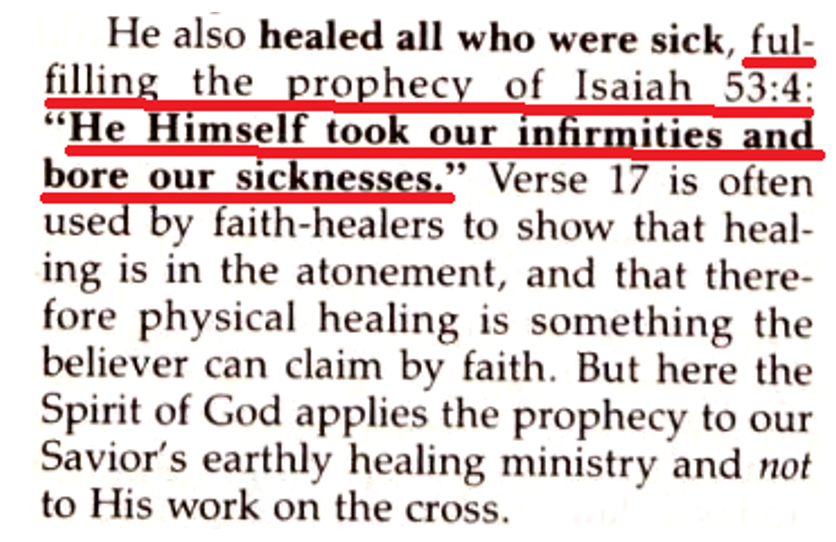
Many, many years ago I was studying Matt 8, and was reading the Believer Commentary on it, and I read:
What is cosmic problem since Adam & Eve?
Answer: Sin.
Is there anything else at all, that was a great problem for God? No.
Did God need to send a Sacrifice for anything else but sin? No.
Sin was the great problem. A problem that all manmade religions do not cater for. What to do with the great problem of sin?
I.e. Judaism, Islam, Hinduism, Janism, New Age…
They all find ways of earning salvation. A salvation by works.
After reading the Believers Commentary on, Matt 8 ‘carried away diseases’…
I found that Isa 53, speaks of ‘healing’ in 2 different ways, and is quoted in the New Testament in 2 different ways. Matt 8:22 & 1Pet 2:24.
I began to realise how self-centred we were, and how demanding we have become, because we thought healing was a ‘right’.
God ‘gave us the right to become children of God’ because of the sacrifice of His Son, Jesus. He did not give us the right to physical healing. It is a gift, not a right.
John 1:12 But to all who did receive him, who believed in his name, he gave the right to become children of God…
The cross grants the right to forgiveness and adoption, not healing.
Cross about the great cosmic problem of sin, that cut us off from heaven.
Cross is about terrible sin. Don’t dumb it down with physical healing.
Sin is so evil, before a Pure, Holy God.
We were spiritually ‘sick’ and needed to be healed as Isa 53:6 tells us. And
1Peter 2:24 ‘…and by His stripes you were healed.’ Spiritually healed. That means forgiven. It is a common theme that runs through the Bible.
Forget about physically sick, we were ‘spiritually’ sick, and on our way to hell for all eternity.
But we Pentecostals got a little too excited about physical & emotional healing, and used it to draw people into the Church. And we did not take to the time to do a 5 minute study and find the problem.
Summary And The Problems of this Wrong Understanding
Sin was the great cosmic problem that needed to be atoned for, and it was in the cross. Mere physical healing never needed to be.
Physical healing is simply a gift, a benevolent move on God’s behalf. Physical healing is only related to the Cross in that God accepts us because His Son died for our sin; much the same way that God gives us food to eat or revelation because we are acceptable to Him. What need does God have to sacrifice His spotless Son just to give us a physical healing, mere physical healing would never require that, whereas sin, and only sin demanded it. Yet, at the end, God’s own, will be perfected physically too.
The problem of sin had been finally and totally dealt with as a mere lamb could not – this is the recurring excited proclamation of the New Testament writers. Physical healing just did not figure as prominently in their thinking. Physical healing was not ‘The Work’ but rather ‘a sign’ (John 2: 1-10) that God had done ‘THE WORK’ through His Son.
The idea that physical healing is included in the atonement, as a guaranteed benefit, is common among Word of Faith and some Pentecostal groups. They frequently cite Isaiah 53:5, Matthew 8:17, and 1 Peter 2:24 as proof-texts.
However, this position fails on several exegetical and theological grounds:
- It detracts from the real significance of the Blood of Christ: and it’s propitiatory value. If you are not healed, was the Cross not sufficient? After removing sin that might block healing, is the Cross insufficient? Do not devalue the Cross – sin is the ‘great terrible’ that, great cosmic problem that required the highest and most Sacred Sacrifice. Healing is easy, but ‘SIN’. Do not cheapen the Cross by saying that it was about something as minor as physical healing.
- It became a ‘right’: We have taken this teaching with our modern self-centred focus and demanded healing as though it were our right, because Jesus died for it. So we think it is absolutely ours. We do not talk the same way about salvation, we are rather humbled by it – grateful for His sacrifice and not demanding of it. A different attitude.
- Contextual Misuse of Isaiah 53: The healing language is metaphorical, set in the context of transgression and iniquity (vv. 5–6). The Hebrew refers to covenantal restoration. Jesus’ substitutionary suffering is described in moral categories, not medical.
- Matthew 8:17 Applied to Earthly Ministry, Not Cross: Matthew clearly applies Isaiah 53:4 to Jesus’ healing during His life, not His death. It does not teach that the cross secured healing.
- 1 Peter 2:24 Speaks of Moral Restoration: Peter explicitly defines the “healing” as turning from sin, not recovering from disease. This confirms a spiritual, not physical, interpretation.
- Lack of Apostolic Teaching: Nowhere do the apostles claim that Jesus died so we might be physically healed in this life. Paul’s theology is future-oriented (Rom 8:23). Timothy (1 Tim 5:23) and Trophimus (2 Tim 4:20) remained sick.
- Category Confusion: Word of Faith conflates spiritual atonement with physical benefits. While the eschatological promise includes bodily redemption, that is not yet realized (Rom 8:23; Phil 3:21).
- Presumption vs. Faith: The expectation of guaranteed healing shifts the locus of trust from God’s will to human insistence. This borders on presumption, not biblical faith.
Pentecostals are so deeply attached to this doctrine, even though it is not necessary for healing to be included in the work of the Cross. Why is this doctrine so important, considering that God heals people anyway, why must it be connected to the Cross?
So, sin was the great cosmic problem that God had to find a solution (not healing) and the Perfect Man, Christ Jesus was that Man and solution – the way, the truth and the life.
And He called us to remember this week by week, until He comes again.
Let us eat & drink, discerning the body of Christ.
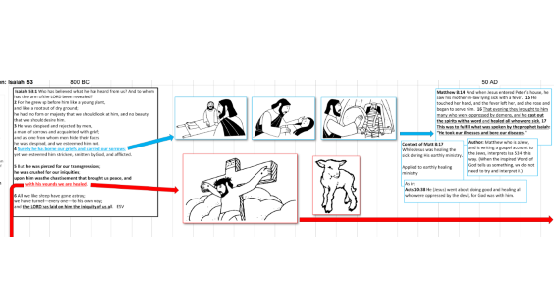
Chart explanation:

Download Chart: PDF
Open Chart: PNG Image
How to Read the “‘By His Stripes…’ = Spiritual Healing/Forgiveness” Chart
Goal of this page: explain how to read your chart that argues Isaiah 53:5 (“by his stripes we are healed”) refers primarily to spiritual healing/forgiveness, not a guarantee of physical healing in this life, and show how this integrates with 1 Corinthians 11:27–32 (Communion discipline). This guide is text-first (ESV), grammatical-historical, and Dispensational-friendly while engaging Free-Will/Provisionist concerns about real human response.
1) What the Chart Is (and Is Not)
What it is: a visual map that (1) anchors “by His stripes” in the Servant Song (Isaiah 52:13–53:12), (2) traces how 1 Peter 2:24–25 interprets that line as sin-bearing and moral/spiritual restoration, and (3) explains how Communion discipline in 1 Corinthians 11:27–32 is judicial (for sin) rather than a blanket promise of bodily healing on demand.
What it is not: a denial that God can or does heal physically; a denial that Christ’s atonement is the ultimate ground of all healing (now in part, consummated in resurrection). It simply clarifies the exegetical scope of Isaiah 53:5 and Peter’s citation.
Quick reading cue: the chart treats “healed” in Isa 53:5 as forgiveness/renewal (the disease is sin; the cure is atonement), then places every other use (e.g., James 5 prayer for the sick) under that gospel baseline. For mainstream explanations of this reading, see summaries that emphasize the spiritual-healing context of Isa 53 and 1 Pet 2:24. (GotQuestions.org)
2) Big Picture: How the Components Fit Together
Picture the chart in four rings with two cross-bars.
Ring 1: Text Anchors (Center)
- Isaiah 52:13–53:12 (ESV)—the Servant suffers for transgressions/iniquities; “by his wounds/stripes we are healed” (53:5) sits in a stanza dominated by sin/iniquity terms (vv. 4–6, 8, 11–12).
- 1 Peter 2:24–25 (NA28/UBS5)—Peter cites the line and glosses it: “He himself bore our sins in his body on the tree… that we might die to sin and live to righteousness; by his wounds you have been healed.” The healing is defined as conversion/ethical renewal (turning from sin to righteousness).
How to use it: The chart draws a solid arrow from Isa 53:5 → 1 Pet 2:24–25, marking Peter’s inspired interpretation as controlling for Christian theology of the verse (OT promise → NT fulfillment).
Many popular-level articles agree that Peter’s context clarifies the referent as spiritual healing—the removal of sin’s guilt and power—while acknowledging God’s freedom to heal bodily. (GotQuestions.org)
Ring 2: Word-Study & Syntax (Exegesis Layer)
- Hebrew: ḥăbūrâ (“stripe/wound”), rāfāʾ (“heal”). In Isaiah 53 the lexical field around v.5 is penal-substitutionary (transgressions, iniquities, chastisement), steering rāfāʾ toward moral/spiritual repair (cf. Isa 1:4–6; 6:10).
- Greek (1 Pet 2:24): iasthēte (“you were healed,” aorist passive), with telic clause “that we might die to sins and live for righteousness”—a conversion/sanctification frame, not a medical frame.
How to use it: The chart embeds brief glosses but insists you read the pericope (not just lexicon entries). The contextual meaning is primary.
Ring 3: Doctrinal Synthesis (Atonement & Salvation)
- Penal Substitution: the Servant bears our sins; the benefit is forgiveness, justification, reconciliation, and new life (Isa 53:11; Rom 3:21–26; 2 Cor 5:21).
- Already/Not-Yet Healing: bodily healing is provisionally experienced (miracles, answers to prayer), but guaranteed in resurrection (Rom 8:23; Rev 21:4). The chart labels this “through the atonement” (ultimate ground) rather than “in the atonement” as a present-life guarantee. For a cautious articulation, see pastoral/theological pieces that make this distinction. (storyofgrace.org)
Ring 4: Church Practice (Communion Discipline)
- 1 Corinthians 11:27–32 (ESV)—“That is why many of you are weak and ill, and some have died.” The chart tags this as judicial, not sacramental-mechanical: the Lord disciplines for unworthy partaking (factionalism, despising the poor, failure to “discern the body”).
- Key logic: Illness/death here are occasional acts of discipline, not a blanket teaching that the Supper automatically confers physical healing when taken, or automatically makes you sick when taken. Mainstream conservative commentary recognizes the discipline frame. (evidenceforchristianity.org)
Cross-bars on the chart:
- Bar A: “Gospel Baseline”—Isa 53 → 1 Pet 2 defines healing as forgiveness/renewal.
- Bar B: “Pastoral Boundaries”—James 5 invites prayer for the sick; God may heal now; the resurrection is the certain healing.
3) Legend—Colours, Lines, and Markers
- Colours by category:
Blue = Text anchors (Isa 53; 1 Pet 2),
Gold = Atonement/Salvation nodes,
Purple = Sanctification/Conversion outcomes,
Red = Discipline warnings (1 Cor 11),
Green = Prayer & Providence (James 5; Matt 8–9). - Solid arrows = canonical derivation (OT line → NT explanation).
- Dashed arrows = theological coherence links (e.g., Cross → Resurrection hope; Prayer → God’s freedom to heal).
- Superscripts distinguish primary vs supporting passages.
Read the legend first so you don’t mistake a discipline panel for a healing-promise panel.
4) A 15–20 Minute Walkthrough
- Start at Isa 53:5 box; read vv.4–6 aloud (note transgressions/iniquities).
- Follow the solid arrow to 1 Pet 2:24–25; underline “bore our sins… die to sins… live for righteousness… you were healed.”
- Move to Atonement nodes (justification, reconciliation, new heart).
- Visit the “Already/Not-Yet” node: present mercies vs future resurrection.
- Open the Communion discipline panel (1 Cor 11:27–32): note diagnosis (factions, selfishness), remedy (self-examination, discern the body), goal (discipline so as not to be condemned).
- End at the Pastoral Boundaries: James 5 prayer, God’s freedom to heal, no guarantee demanded from Isa 53:5; set believers’ expectation on holiness and resurrection hope.
For readers scanning online debates: concise conservative summaries that “stripes = spiritual healing (sin-healing)” while affirming God’s ability to heal are common in trusted evangelical sources. (GotQuestions.org)
5) Worked Examples (How to Use the Chart in Real Study)
A) “Stripes” Word Claim vs. Context Claim
- Observation: “healed” (rāfāʾ/iaomai) can mean physical or spiritual healing.
- Context rule: in Isa 53 and 1 Pet 2, the immediate context saturates with sin language and ethical renewal outcomes; therefore context narrows the sense to spiritual/moral healing.
- Action on chart: you’ll see a context filter overlay that tints the “healed” node toward forgiveness/renewal when the sin cluster dominates.
B) Communion: Promise or Discipline?
- Observation: Some teachings treat the Supper as if the bread = automatic physical healing.
- Text rule: 1 Cor 11 gives warnings and records discipline; it does not predicate a healing rite. The Lord’s Supper proclaims the Lord’s death and calls for self-examination and body discernment.
- Action on chart: red discipline node frames this as holiness rather than health-rite.
A number of answers and articles (across traditions) treat 1 Cor 11’s sickness/death as divine discipline rather than a health mechanism. (evidenceforchristianity.org)
C) How James 5 Fits
- Observation: James 5:14–16 commands prayer for the sick.
- Synthesis: The chart draws a dashed link from James 5 to Providence/Prayer, not to Isa 53:5 as a guarantee clause. Pray earnestly; trust God’s wisdom; rest in the resurrection as your certain healing.
6) Exegesis (Structured)
Original Language
- Isa 53:5: ḥălāl (pierced), dakkāʾ (crushed), mûsār (chastisement), rāfāʾ (heal). Semantic domain in Isaiah frequently targets covenant sickness = sin (cf. Isa 1:5–6; 6:10).
- 1 Pet 2:24: anēnenken (He bore up), hamartias (sins), dikaiosynē (righteousness), iasthēte (you were healed)—teleology is ethical (“die to sins, live for righteousness”).
- 1 Cor 11: krima/krinō (judgment/discipline), astheneis (weak), arrōstoi (ill), koimōntai (fallen asleep = died) in discipline frame.
Grammar & Syntax
- Isa 53:4–6 Hebrew parallelism pairs sin-terms with suffering-terms.
- 1 Pet 2:24 purpose clause hina (“that we might…”) defines the healing outcome as moral transformation.
- 1 Cor 11 causal “for this reason” (v. 30) ties illness/death to profane participation, not to a generic “lack of claiming healing.”
Textual Variants
No major variant shifts the sense of Isa 53:5 or 1 Pet 2:24–25; the interpretive center stands on context, not a disputed reading.
7) Theological Analysis
- Free-Will/Provisionist & Dispensational synthesis:
- Atonement: Christ dies for sins (1 Cor 15:3); forgiveness and new life are offered genuinely to all; believers must respond (Acts 17:30).
- Healing today: Ask boldly; accept God’s wise will; expect certain bodily restoration at resurrection (Rom 8:23).
- Communion: a holy ordinance calling for self-judgment and body discernment, not a health-sacrament.
- Calvinist/Reformed contrast (for clarity): greater emphasis on decree/compatibilism regarding providence and suffering; both frameworks can and should affirm that Isa 53:5’s healing in Peter is spiritual and that Communion warnings concern discipline.
Conservative resources frequently underline the spiritual-healing emphasis of Isa 53:5/1 Pet 2:24 and the gospel-centered nature of the Supper. (GotQuestions.org)
8) Historical & Jewish-Context Notes
- Isaiah’s disease-for-sin metaphor (Isa 1:5–6) prepares you to read healing as forgiveness.
- Passover → Supper line: the memorial of deliverance becomes the proclamation of the cross (Luke 22:19–20; 1 Cor 11:26).
- Holiness assembly: eating the holy meal unworthily violates covenant reverence, hence discipline (cf. Lev 10; 1 Cor 11).
9) Scholarly Insight (for deeper work; no direct quotations here)
- Henry C. Thiessen, Lectures in Systematic Theology (Grand Rapids: Eerdmans, 1979).
- Leon Morris, The Apostolic Preaching of the Cross (Grand Rapids: Eerdmans, 1955).
- Robert E. Picirilli, Grace, Faith, Free Will (Nashville: Randall House, 2002).
- Jack Cottrell, What the Bible Says About God the Ruler (Joplin, MO: College Press, 1984).
- Arnold G. Fruchtenbaum, Israelology (Tustin, CA: Ariel, 1993) — on already/not-yet expectations and covenant coherence.
(Use page-exact citations if you later pull direct quotations.)
10) Practical Application (Pastoral Boundaries)
- When sick: pray (James 5), call elders, pursue treatment wisely, trust God’s timing; do not treat Isa 53:5 as a contract clause guaranteeing immediate cure.
- When taking Communion: examine yourself, discern the body, repent of partiality or contempt (1 Cor 11:27–32). Expect holiness fruit; tremble at presumption.
- When teaching others: start at Isa 53 → 1 Pet 2; then show 1 Cor 11 as a discipline text; end with resurrection hope (Rom 8:23; Rev 21:4).
11) FAQs (Search-oriented)
Q1: Does “by His stripes we are healed” promise physical healing now?
No. In Isa 53 and 1 Pet 2, the healing is spiritual—forgiveness and moral renewal—though God may grant physical healing in answer to prayer, and will in resurrection. (GotQuestions.org)
Q2: Isn’t Communion for healing?
Communion proclaims the death of Christ and calls for holy participation. 1 Cor 11 records discipline (weakness/illness/death) for profaning the meal; it does not institute a guaranteed healing rite. (evidenceforchristianity.org)
Q3: Is there “healing in the atonement”?
Ultimately yes—because the cross secures new creation. But Scripture does not guarantee every believer’s bodily healing in this age. A balanced formulation is “healing through the atonement” (ultimate ground; resurrection certainty). (storyofgrace.org)
12) Representative Scripture Index (ESV)
- Servant & Stripes: Isa 52:13–53:12 (esp. 53:4–6, 11–12)
- NT Interpretation: 1 Pet 2:21–25
- Communion Discipline: 1 Cor 11:17–34
- Prayer & Healing: James 5:13–18
- Atonement & New Life: Rom 3:21–26; 5:6–11; 2 Cor 5:21
- Resurrection Healing: Rom 8:18–25; Rev 21:1–5
13) A Repeatable Study Loop (Print This)
- Pick the node (e.g., “By His stripes”).
- Read the pericope (Isa 53; 1 Pet 2) and note the sin-cluster.
- Trace arrows to Atonement and Sanctification nodes.
- Visit Communion (1 Cor 11) to set pastoral boundaries.
- Synthesize one sentence: “By His stripes = forgiveness/new life; Communion demands reverence; bodily healing = God’s gift now, guaranteed at resurrection.”
Minimal External Reading (no quotations reproduced here)
- Leon Morris, The Apostolic Preaching of the Cross (Grand Rapids: Eerdmans, 1955).
- Jack Cottrell, What the Bible Says About God the Ruler (Joplin, MO: College Press, 1984).
- Robert E. Picirilli, Grace, Faith, Free Will (Nashville: Randall House, 2002).